
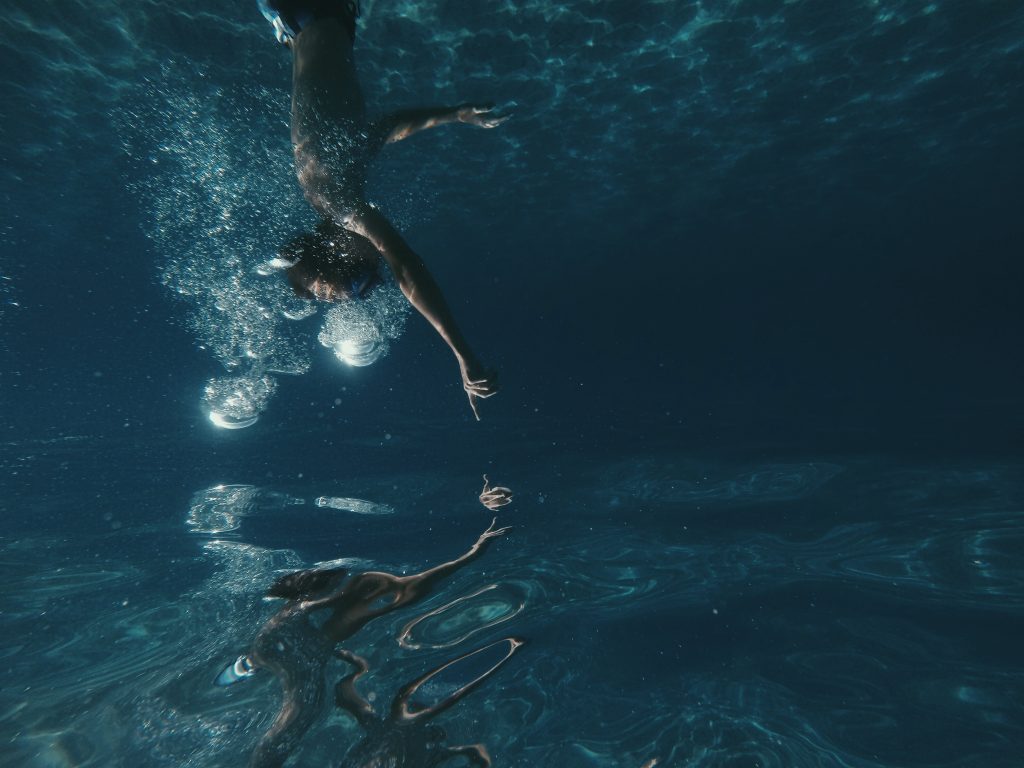
Why has swimming saved my life?
I have participated in sports all of my life. Soccer, basketball, and volleyball.
Swimming has been the only sport I have participated in that holds no judgment. Allows me to be myself, work towards my own goals, allows me to coach myself and hold myself accountable. I am my own coach. I am my own cheerleader, my own competition, and I am my own champion.
Swimming for me is my mental health therapist and is the gym that I work out at, alone. Well, there are others there working out too, but this is my gym. The only gym that I know the equipment, and I know what to do, and how to use it. I don’t have to compare my body, or my pace, or my workout to anyone else’s because I am only competing with myself. And I am not competing, because I am motivated. I am cheering. I am coaching, and I am silent all at the same time. Which means, I am talking to myself, in my own head. I do not have a coach yelling, telling me what to do, or how to do it. I do not have a crowd of fans; I am my own fan. I do not have a team I am competing against; I am my only competition.
Learning to swim is more than a life skill. Yes, it is a fundamental life skill because it is a drowning prevention water safety tool. It teaches individuals to survive in emergency situations when in the water.
Learning to swim means you understand and learn how your body works with the water.
Learning how to float means you learn to trust your body, and learn that the water will hold you if you let go and allow it.
Learning to swim means you learn how to “exchange air” which means you learn how to release the air in your lungs underwater, so you can come up and get air.
Learning to get air is one of the most important skills when learning to swim. You cannot survive and feel safe swimming by just holding your breath. That will cause panic because when you hold your breath, you have to let it out quickly and quickly gasp for “fresh” air, as I call it.
Learning to float means learning your buoyancy. Learning how to trust the water and that the water can and will hold you if you allow. This takes time and patience to learn how to trust and not control the water.
Learning to swim builds trust within yourself. Confidence knowing that you can save yourself in the water.
Learning to swim teaches you breath work. Controlled breathing is patterned breathing to mentally and physically calm the nervous system, reduce stress, anxiety, and blood pressure. It promotes relaxation, enhances immune functions, boosts energy, and can help process emotional trauma or pain.
Swimming builds resilience, confidence, and the ability to quiet the mind while opening up the heart.
Swimming not only saves lives literally, figuratively, but it also saves the soul.