
That longer exhale activates the parasympathetic nervous stem. Your body’s natural “rest and recover” mode.
Repetitive movement becomes moving meditation.
Stroke, Kick, Breathe, Repeat.
The predictable rhythm reduces mental noise and shifts attention away from racing thoughts. Your brain naturally enters a more mindful state.
Water helps switch off your stress response. Swimming has been associated with; lower stress hormones over time. Improved mood. Better emotional regulation. You feel lighter after leaving the pool.
Your vagus nerve gets involved.
Slow breathing and even having immersed in water can increase vagal activity, a key part of your calming nervous system.
Greater vagal activation is linked with; feeling more relaxed, better emotional regulation, faster recovery after stress.
Everything happens at once.
Rhythmic breathing. Repetitive movement. Parasympathetic activation. Less stress. Endorphin release.
Together, your brain shifts from survival mode toward a calm.
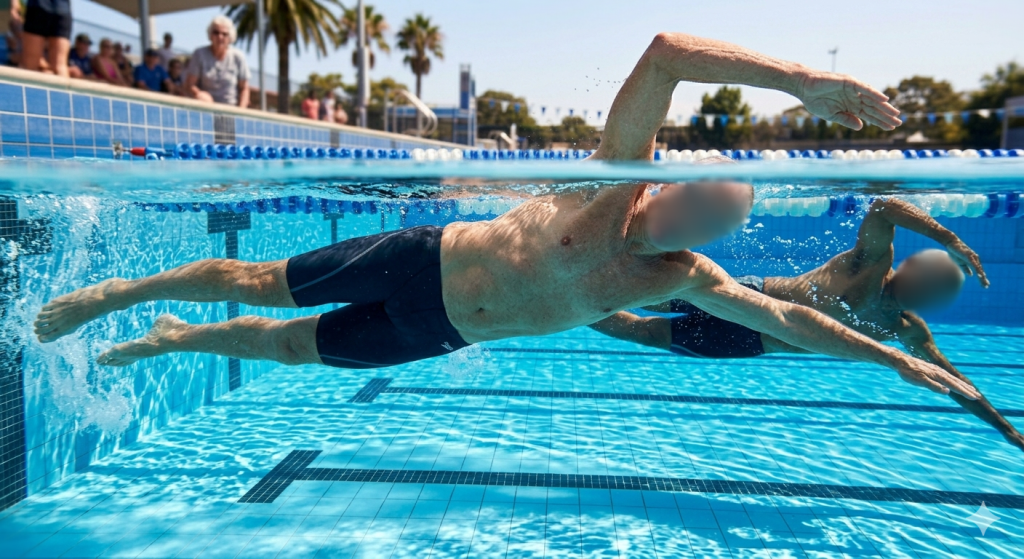
Your brain experiences swimming almost like a moving meditation.
Swimming combines rhythmic movement, controlled breathing and full body immersion. Three powerful signals that make you intensely aware of the body and tell your brain: “you’re present.: Your nervous system responds differently than it does during many other workouts.
Being present with yourself is not always easy, but the quietness of the water, the movement and the peace is truly a gift of nature.